
Bathroom Safety for the Elderly: The Complete Caregiver’s Guide
CFG may earn a commission from products purchased through our links.
When I did a bathroom safety walk-through of mom’s bathroom, I expected to find one or two issues with quick fixes. What I found was a room that seemed specifically designed for the worst possible outcome.
The toilet was too low for her and her bad knees. The tub required a step-over that would challenge anyone with balance issues. The existing bathroom grab bars had been installed where it looked good to the previous owner, not where a person actually reaches when they’re losing their footing. I had assumed a safe bathroom was a foregone conclusion. It was not.
It’s official; the bathroom is one of the most dangerous rooms in the home for older adults, and the numbers make clear why. According to the CDC, nearly 81% of bathroom injuries among older adults are caused by falls. Wet floors, confined spaces, the physical effort of navigating a low seat, stepping over a tub ledge while tired or medicated: the bathroom asks a lot of a body that’s working harder to stay upright than it used to.
The reassuring part is that most of these risks are fixable. Some fixes are free, like getting rid of that old rug with curled corners. Some solutions cost less than a grande coffee. Others require a drill and a free Saturday. This guide covers how to assess your parent’s unique situation before spending a dollar, which categories of equipment address which risks, and when to call someone for installation help. If you want the deep dive on a specific product category, the guides linked throughout go further on selection and installation.
Why the bathroom is a fall zone
The bathroom stacks all the wrong and wet conditions at the same time. Multiple surfaces are wet almost as much as they’re dry. The toilet is usually lower than most chairs, which means standing up requires more quad strength than most people realize until those things start going. The tub requires stepping over a barrier with your bare feet, often while still wet. Nighttime trips happen when reflexes are slower, when poor vision meets dark halls, and your parent is operating at about forty percent.
Medication can compound the risks. Dizziness, blood pressure fluctuations, slowed reaction times: the drugs that help your parent’s heart or sleep quality can unintentionally raise their fall risk in a room that already has plenty.
Space is the last problem. The average bathroom is one of the smallest, if not the smallest, room in the house. When someone starts to fall, the things within reach (towel bars, toilet paper holders, the edge of a sink) are not rated for body weight. They come off the wall. That’s when a stumble becomes a 911 call.


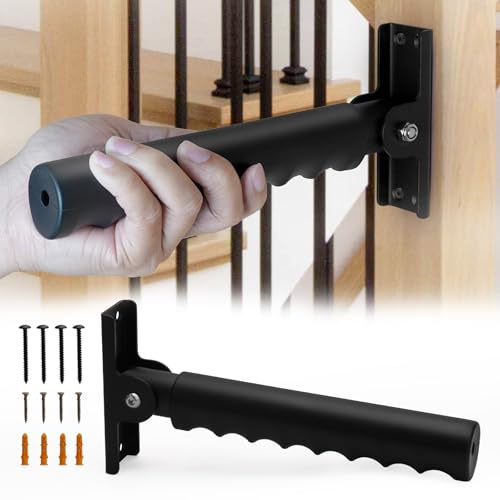

Want to Go Deeper on Grab Bars?
Choosing the right grab bar involves more than picking a finish that matches your fixtures. Weight ratings, studs or drywall mounting, ADA placement heights, and what to do when the most helpful location doesn’t line up with a stud in the wall.
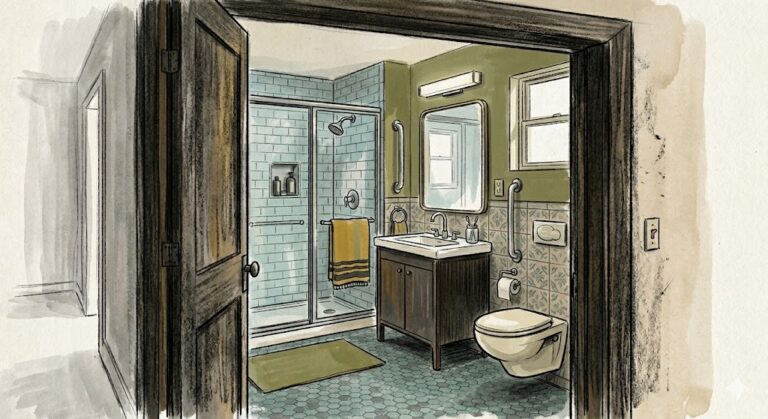
Assess Your Parent’s Bathroom Before You Buy Anything
Buying equipment before you understand the specific risks in your parent’s bathroom is how you end up with a grab bar in the wrong spot. Spend ten minutes doing this first. It’s worth it.
Ask your (clothed) parent to go through their normal routine while you observe. Note where they reach for support that isn’t there, where they slow down, and where their feet are during the highest-stress moments: the toilet sit-to-stand and the tub entry and exit. Note that where they SAY they need a grab bar might not be where they actually need it. This is why observation is critical, and not just a conversation.
Then take a good, objective look around the room. If you live in the same space, you are likely in cruise control when you’re in the bathroom. Looking at the space with fresh eyes keeps you from missing low hanging fruit. Take nothing for granted. Is the toilet seat so low that getting up requires visible effort? Would a taller seat solve it, or do they need stable arms for leverage, or maybe both? Does the tub or shower have any traction underfoot? Is there anything on the walls rated for body weight? Is the path from the bedroom to the bathroom clear and lit at two in the morning?
Your observations tell you where to spend first. A parent struggling to stand from the toilet needs rails before they need anything else. A parent whose main risk is the shower entry needs a grab bar, and possibly a shower chair. Buying in order of actual risk can prevent ambulances, and it spreads the cost across paychecks.
Permanent Modifications vs. Portable Equipment
Not every bathroom modification for elderly parents requires drilling into tile, which matters if you’re renting, or if your parent lives somewhere you don’t own.
Permanent wall-mounted grab bars and folding rails anchor into studs. They are rated to handle body weight in a real fall without discussion. Portable and tension-mounted options (floor-to-ceiling poles, suction grab bars, freestanding toilet rails) give you flexibility and skip the drill, but they need to be checked periodically. A suction cup that’s lost its seal is not a grab bar anymore.
Many aging-in-place situations call for both. A permanent wall-mounted bar at the tub entry, where the stakes are highest, alongside a portable rail at the toilet that can move if the setup needs to change. Let the risk level at each location drive the decision, not the convenience of installation.
Toilet safety rails
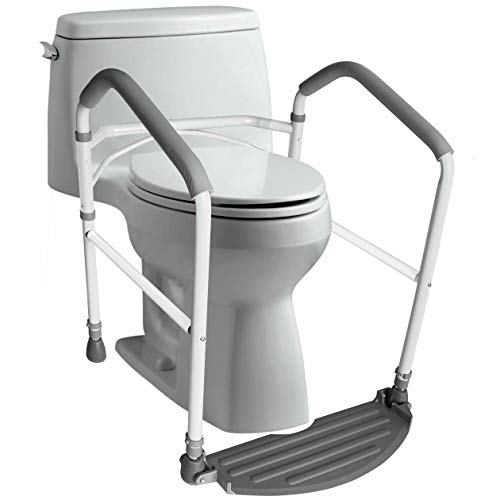
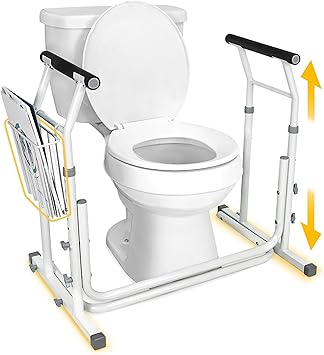
Toilet safety rails and bars for the elderly make sitting and standing easier for older adults, easing strain on the knees and hips while providing stable handholds for balance. They’re an affordable upgrade that can prevent falls and bring independence to your parent when privacy is preferred.
|
Mobile Pick
|
Foldable Pick

|
Adjustable Pick
|
|
Height adjustable with angled rails for better ergonomics. Folds flat and portable for family visits. |
Single rail tucks away for more space and reduces the clinical vibe when parents need less support. |
Permanent setup with height adjustment, reading material rack, and angled handles that provide better leverage and clearance from walls. |
Height adjustable with angled rails for better ergonomics. Folds flat and portable for family visits.
Single rail tucks away for more space and reduces the clinical vibe when parents need less support.
Permanent setup with height adjustment, reading material rack, and angled handles that provide better leverage and clearance from walls.
Shower chairs
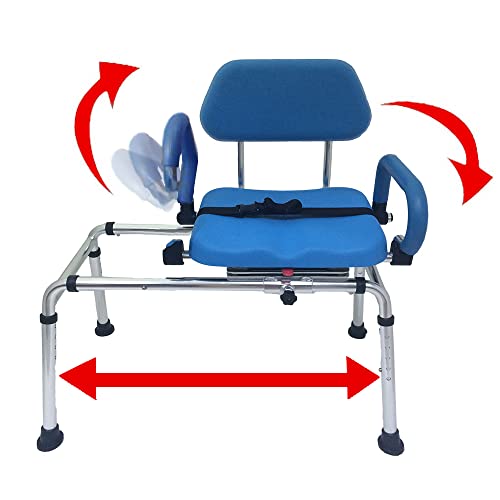
A big booster of independence, a shower chair for elderly family members allows them (and you) to bathe while seated, reducing fatigue and significantly lowering the risk of slips. Look for adjustable designs that will help you assist with bathing without awkward bending or lifting.
|
Field Tested

|
Budget Pick

|
Non-Budget Pick
|
|
We moved this from shower to bathtub for a better fit. Very sturdy with padding that reduces cold shock. Assembly is tricky, so put your Ikea hat on. |
Medline is everywhere in hospitals for good reason. Well-made and portable, this compact pick allows more shower maneuverability than bulkier models. |
The sliding chair straddles the bathtub side for assisted entry and exit. You pay for versatility, but it makes bath time less exhausting. |
We moved this from shower to bathtub for a better fit. Very sturdy with padding that reduces cold shock. Assembly is tricky, so put your Ikea hat on.
Medline is everywhere in hospitals for good reason. Well-made and portable, this compact pick allows more shower maneuverability than bulkier models.
The sliding chair straddles the bathtub side for assisted entry and exit. You pay for versatility, but it makes bath time less exhausting.
Handheld shower head
A handheld shower head with a hose allows parents (and caregivers) to minimize awkward movements when trying to hit every spot for either independent or assisted bathing. And their long hoses easily reach those seated in a recommended shower chair.
|
Budget Pick

|
Field Tested

|
Field Tested

|
|
This high-pressure model is easy on the Venmo and, with its 6 settings, lets your parent dial in the perfect shower. |
Features a pause button that shuts off water without turning off the faucet. A game changer when Mom needs time to position herself safely. |
The magnetic attachment lets your aging parent easily detach and reattach the shower head, perfect for reaching from a seated position. |
This high-pressure model is easy on the Venmo and, with its 6 settings, lets your parent dial in the perfect shower.
Features a pause button that shuts off water without turning off the faucet. A game changer when Mom needs time to position herself safely.
The magnetic attachment lets your aging parent easily detach and reattach the shower head, perfect for reaching from a seated position.
Floor to ceiling grab bars
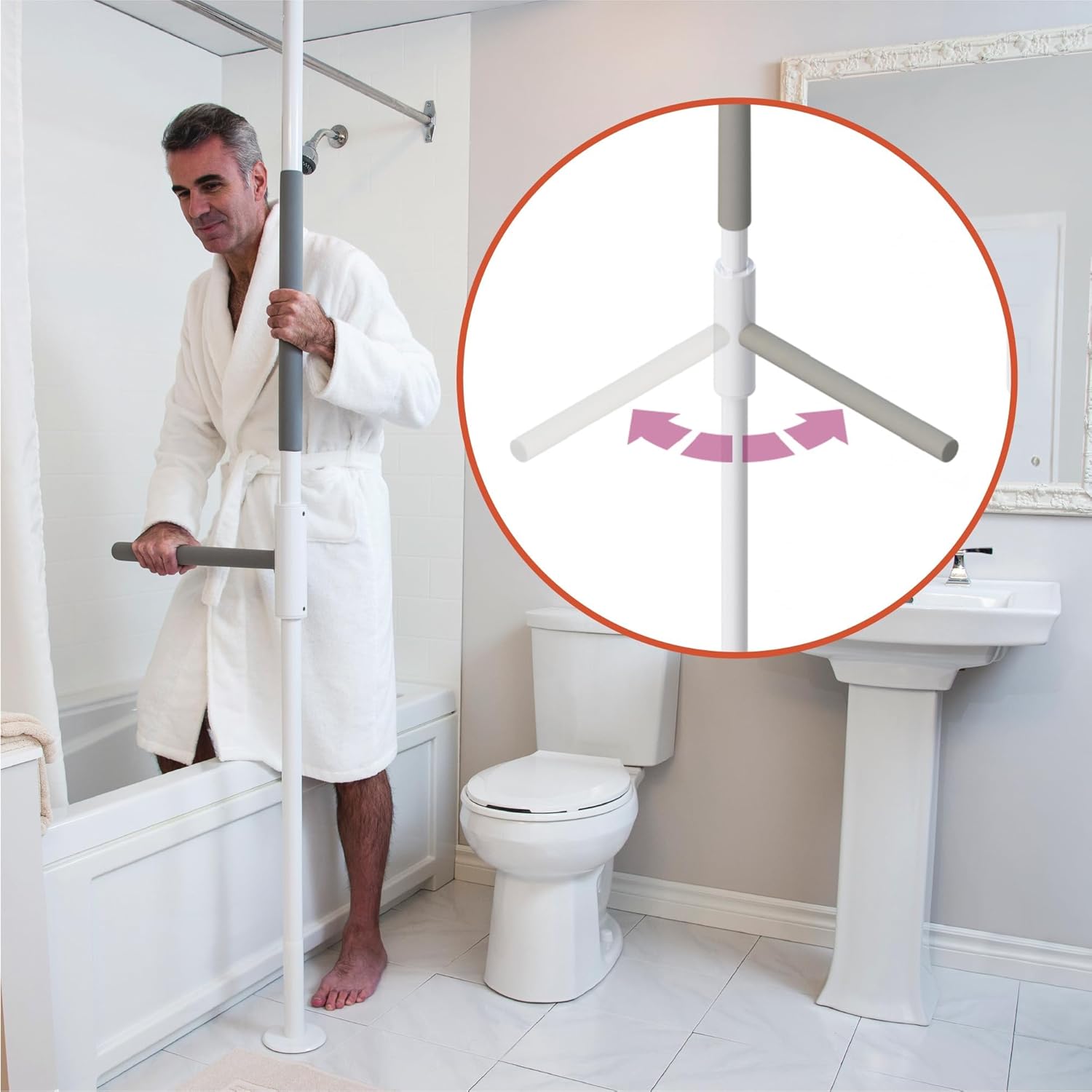
Floor to ceiling poles, while more obtrusive than grab bars, are often the best choice for those that need support navigating about the bathroom. In some cases, a single pole might replace 2-3 grab bars. Most models are drill-free, so you can make quick work of installation (and ideal for renters). Their adjustable height and optional rotating handles make it a flexible, safe solution for bathrooms, bedrooms, and any space where extra stability is needed.
|
Versatile Pick

|
Adjustable Pick
|
Slim Pick

|
|
This pole offers 360° rotation and locks every 45°, making it ideal for flexible placement. The wavy handle allows for multiple grab angles as parents move about the space. |
Great for bedroom and bathroom use, this pole's pivoting 16″ grab bar rotates and locks in place. The extended bar provides more reach options than standard poles. |
If your parent doesn't need multiple grab options, this slim design provides more space for those of us sharing the bathroom. |
This pole offers 360° rotation and locks every 45°, making it ideal for flexible placement. The wavy handle allows for multiple grab angles as parents move about the space.
Great for bedroom and bathroom use, this pole's pivoting 16″ grab bar rotates and locks in place. The extended bar provides more reach options than standard poles.
If your parent doesn't need multiple grab options, this slim design provides more space for those of us sharing the bathroom.

Non slip bath mats
A high-quality, non slip bath mat adds instant grip underfoot, whether placed in the bathtub, the shower, or on wet bathroom tile. Look for mats that tout anti-curling and/or mildew-resistant. I recommend you “test drive” the new mat to ensure it’s secure before their first use.
|
Best Everyday Value

|
Best for Walk-In Showers

|
Hang Dry Option

|
|
More coverage than most mats with unmovable suction and machine washable convenience. Multiple colors available to match your tub and look less like a safety feature. |
This mildew resistant mat is cut for standard step-in shower dimensions, but it can be cut to match the footprint of your shower. The large holes provide better drainage than some competitors. Same as our Extra Coverage pick, there are additional colors available to match your decor. |
The only model I found with hooks for hanging after use, which means less frequent cleaning. When needed, it's machine washable. |
More coverage than most mats with unmovable suction and machine washable convenience. Multiple colors available to match your tub and look less like a safety feature.
This mildew resistant mat is cut for standard step-in shower dimensions, but it can be cut to match the footprint of your shower. The large holes provide better drainage than some competitors. Same as our Extra Coverage pick, there are additional colors available to match your decor.
The only model I found with hooks for hanging after use, which means less frequent cleaning. When needed, it's machine washable.
Toilet seat risers for seniors
Toilet seats can quickly become too low for aging parents. Risers are an affordable way to make a big difference in your parent’s safety, comfort, and independence. Some models have integrated raised seat and rails, something to consider if your parent needs more robust support. Most models are available in a round or elongated design, so don’t make my mistake and buy the wrong shape for your toilet.
|
Lidded Pick

|
Foldable Pick

|
Budget Pick

|
|
Our only pick that accommodates an existing lid. Includes handles for support, but not as much as dedicated rails. |
Flips up and out of the way for shared bathrooms and easier cleaning. We used this but eventually needed one with handles. |
This was our first purchase and works great for the price. Not as sturdy, but very easy to install. Could make a great pick for a smaller restroom. |
Our only pick that accommodates an existing lid. Includes handles for support, but not as much as dedicated rails.
Flips up and out of the way for shared bathrooms and easier cleaning. We used this but eventually needed one with handles.
This was our first purchase and works great for the price. Not as sturdy, but very easy to install. Could make a great pick for a smaller restroom.
Bonus upgrades for additional peace of mind
Anti-scald shower valve
These devices prevent burns, especially important for those with neuropathy or delayed reflexes
Emergency call buttons
Waterproof options for seniors that alert family or caregivers in case of a fall.
Motion sensor night lights
Reduce a nighttime fall risk for your parent (and you). We mounted rechargeable motion-activated night lights underneath the vanity’s kick board, and plug-in night lights for the counter.
The bottom line
A safe bathroom can mean the difference between a close call and calling an ambulance. Start by observing your (fully clothed) parent mimic their typical bathroom routine and start with the safety equipment that addresses their biggest challenge. The least expensive equipment just might address their biggest need. From there, keep checking in with them to see what additional equipment might help improve their safety and independence.
The
