CFG may earn a commission from any products purchased through our links.
When you hear, “Mom is in the ER,” there’s no time for Tote Bag Tetris. CFG’s hospital bag checklist will provide everything you need, before you need it.
Who this article is for
If you care for an elderly family member, this checklist will save time and reduce stress so you can focus on the patient when it matters most. Follow it when packing your go bag and you will have everything in one place, ready to go when time is precious.
Your Go Bag Gear
Personal essentials
While your carry-on luggage list is a sibling to a hospital bag checklist, they aren’t quite the same. For instance, since your loved one will likely be in a hospital gown, a multi-day change of clothes isn’t necessary, leaving you more room for the comfort items later in this list.
Insurance card(s) Intake staff will ask for these right away. Photocopies are fine if your loved one keeps the originals in a wallet or purse.
Phone and charger(s) A must for staying in touch and arranging transportation or updates.
Change of clothes Your parent may have arrived in pajamas or clothing not suited for the weather when you leave the hospital.
Eyeglasses or contacts Include a case and cleaning supplies if possible. There aren’t many soft fabrics in the hospital to clean your glasses.
Basic toiletries Hospitals may provide the basics, but familiar items can make a stay more comfortable.
Field Note
Bring the neck pillow you use on flights. Hospital beds, chairs, and waiting room benches offer zero support. In my experience, extra pillows are a rare sighting, so there’s no guarantee one will be available for that 3am power nap.
Medical history
The handoff from family caregiver to healthcare professional during intake is a critical step. Adding these to your hospital bag ensures nurses, assistants, and physicians have what they need to provide the best care for your loved one.
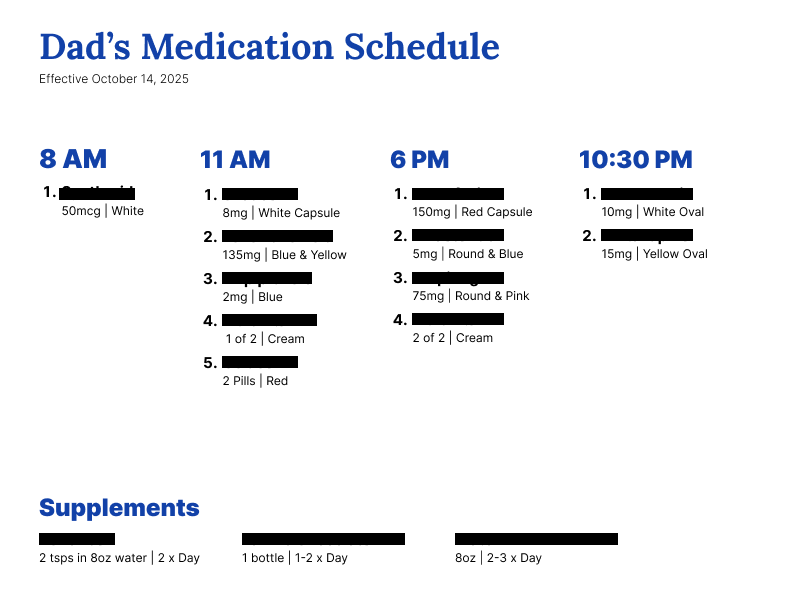
Medications and a current medication list with dosages Read our Medication Management Routine for tips on making a thorough medication list every nurse will thank you for.
Primary Care Physician and Specialist contact information Especially important if they are not in the same healthcare system
Emergency contacts Note friend or family for each contact.
Allergies Note both medication and food allergies.
Past surgeries and approximate dates Helps staff get a complete medical picture.
Copies of legal documents Power of Attorney, advance directives, and similar paperwork.
Notepad and pens (more than one) An analog backup for doctor instructions, vitals, and cafeteria orders.
This is the medication schedule I made for Dad. I keep it on the fridge and in the hospital bag.
Field Note
Bring a paper and pen backup, even if you use a note-taking app. Phone batteries die, and another family member might need to take notes while you step away.
Comfort & entertainment
Hurry up and wait is the name of the game
You’ll learn that you are on the hospital’s timeline, not yours, the instant you walk through the door. For every minute you are rushing to get to the imaging department, you might wait hours for doctors, test results, or the next shift change. Comfort and entertainment items aren’t niceties, they’re important during stressful times.
Kindle Space is precious, so we shared a Kindle, but a physical book can be a welcome break from the screens and monitors. Paperback is a must.
Noise Cancelling Headphones Earplugs help, but over-the-ear headphones block the ever-present bedside monitor beeps and slamming doors
Healthy snacks Hospital food is hit or miss and overpriced
Unhealthy snacks Now is not the time to deny someone a treat
Refillable water bottle Choose a design that is easy to spot in a room full of equipment
Portable wall charger Outlets are scarce; a charger with multiple USB-A and USB-C ports is worth the price. Anker (not a sponsor) has never done me wrong.
Extra charging cables Six-foot cables give you the reach to that single outlet across the room. For extra flexibility grab the 10-foot model.
Power bank Multi-port models keep you, the patient, and visitors charged
Soft throw or blanket Hospital rooms are Antarctica-level cold
Lip balm and hand lotion Hospital rooms are Sahara-level dry
Powdered drinks Vending areas tend to be 3 miles away and when you do find one the credit card reader isn’t working (and when was the last time you carried cash). On-the-go options include instant coffee, tea bags, and electrolyte mixes like Liquid IV.
Power banks are a must for any hospital or ER stay lasting more than a day. You can’t count on having access to an outlet, and you’ll drain your battery quickly by contacting family, checking MyChart, Googling diagnoses, and gaming in the waiting room.
Field Note
Can’t find an outlet? Some hospital beds include hidden outlets installed upside down on the underside of the bed frame.
Field-Tested Finds
Here are some additional recommendations that helped me prepare for the unpredictable.
Slip a location tracker like an AirTag or Tile into your hospital bag It’s easy to forget a bag in a waiting room or when your loved one changes rooms. Ask me how I know.
Place an empty, packable bag inside your main bag Useful for bringing home soiled clothing, shoes, or hospital paperwork. Grocery totes work well.
Set a reminder to replenish supplies every few months Prevent surprises when you need the bag most.
Update your printed medication list with every new prescription Critical for elderly loved ones whose medications may change frequently
Store your bag somewhere unforgettable An entry closet, the trunk of your car, or a garage shelf work well. Once it has a home, keep it there.
Closing thoughts
An easy way to reduce stress during a medical emergency or long hospital stay is maintaining a well-stocked bag. They ensure you, your parent, and medical professionals have what’s needed to give your elderly parent the best care. Pack now so future you can focus on what matters most.
The Caregiver Field Guide shares experience based guidance to help you navigate caregiving. This content is informational and not a replacement for professional medical, legal, or financial advice. Please consult qualified experts when making decisions about care.